Understanding Powder Coating: Basics and Benefits
When it comes to metalwork and finishing, Powder coating stands out as a premier choice due to its durability and aesthetic appeal. This innovative process has revolutionized the way metals are coated and protected, providing benefits that extend far beyond mere appearance. In this article, we will explore the fundamental aspects of powder coating, uncover its advantages over traditional painting methods, and delve into how this technique enhances both durability and aesthetics in various applications.
What Is Powder Coating?
Powder coating is a dry finishing process that involves applying a free-flowing, dry powder to a surface, which is then cured under heat to form a hard, protective layer. Unlike conventional liquid paints, powder coatings do not require a solvent to keep the binder and filler parts in a liquid suspension form. This process allows for a thicker coating without running or sagging, resulting in a more uniform finish. Initially introduced in the 1960s, powder coating has evolved into a popular choice for various sectors, including automotive, furniture, and architectural applications.
Key Benefits of Powder Coating Over Traditional Paint
- Durability: Powder coatings are more resistant to chips, scratches, and fading, making them ideal for outdoor usage and applications subjected to heavy wear.
- Environmentally Friendly: As powder coating contains no solvents, it emits negligible volatile organic compounds (VOCs), aligning with environmental regulations and enhancing workplace safety.
- Cost-Effectiveness: While the initial costs may be slightly higher than traditional paint, the longevity and reduced need for maintenance and touch-ups can lead to significant savings.
- Versatility: Available in various colors, textures, and finishes, powder coatings can easily fulfill aesthetic demands without compromising performance.
How Powder Coating Enhances Durability and Aesthetics
One of the crucial aspects that endear powder coating to manufacturers and consumers alike is its remarkable durability. The powder coating process involves heating the coated metal to a temperature that allows the powder to melt and flow, creating a strong bond. This molecular bonding significantly improves the surface strength and abrasion resistance. Additionally, because powder coatings come in a wide range of finishes—from matte and glossy to textured and metallic—they also offer designers unmatched creative freedom to achieve the desired aesthetic without sacrificing quality.
In-House Powder Coating: Why It Matters
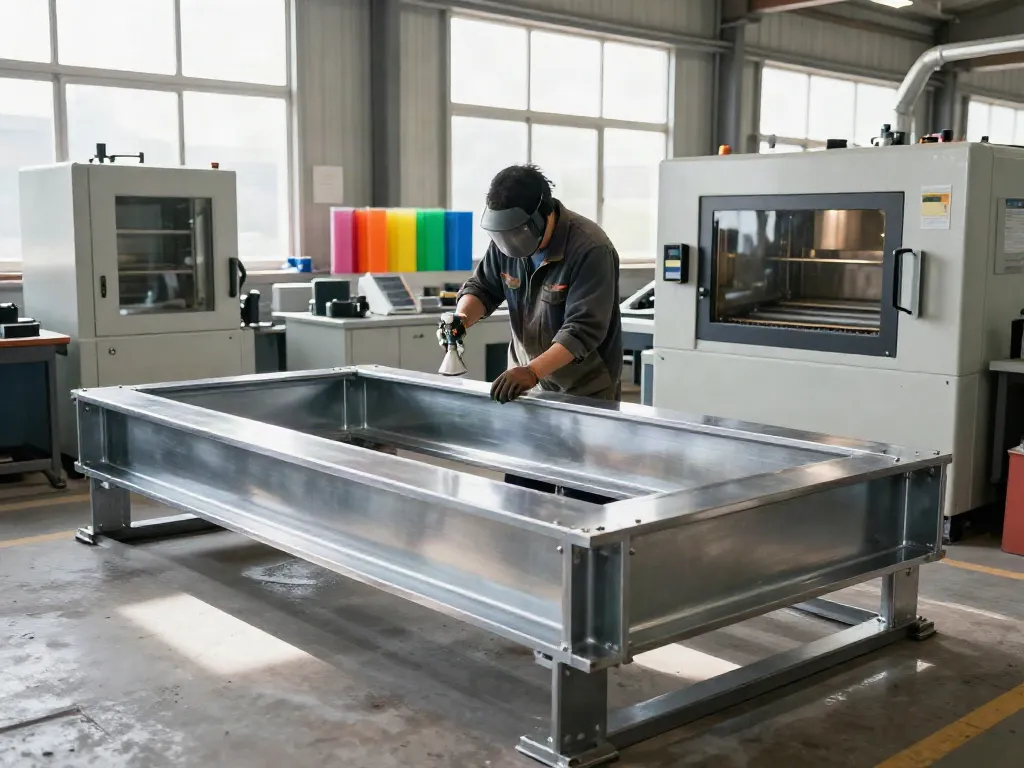
In-house powder coating is an integral part of the workflow at Al Taher Group. By controlling the entire fabrication process, from design to installation, we ensure the highest standards of quality and consistency across our projects. An in-house approach allows for meticulous attention to every detail, which is vital in delivering products that meet the expectations of our clients.
The Advantages of In-House Fabrication and Powder Coating
Having an in-house powder coating facility means we can provide a seamless experience for our clients. This approach offers several advantages:
- Streamlined Communication: With all processes occurring under one roof, clients can communicate directly with the fabrication and coating teams, ensuring that expectations are clearly understood and met.
- Rapid Turnaround Times: We can respond quickly to changes in project scope or schedule since we control all aspects of fabrication and finishing. This agility makes a significant difference in project timelines, especially in a fast-paced construction environment.
- Enhanced Quality Control: Since all work is performed by our skilled technicians, we can monitor quality at each stage, ensuring that the final product adheres to our high standards.
Quality Control and Consistency in Metalwork
In-house powder coating eliminates variability that can arise from outsourcing to third-party facilities. Each batch of finished products is consistent in appearance and performance, thereby enhancing the overall integrity of the project. Attention to detail during the coating process, such as proper surface preparation and thickness control, ensures that every coated item will last, especially in challenging environmental conditions.
Cost-Effectiveness of Using In-House Services
Utilizing in-house capabilities reduces the complexities often associated with outsourcing, such as waiting for quotes, managing multiple suppliers, and dealing with delivery delays. With our in-house services, clients receive an itemized quote that outlines every aspect of the project. This transparency allows for straightforward cost management and often results in lower overall costs due to reduced handling and logistics expenses.
The Powder Coating Process: Step-by-Step Guide
The powder coating process is intricate and requires precision at each stage to achieve the desired results. Here is a step-by-step guide that outlines the key components of the powder coating process:
Preparation and Cleaning of Metal Surfaces
Before applying powder coating, the metal surface must be thoroughly cleaned and prepared. This step typically includes:
- Degreasing: Removal of dirt, oils, and contaminants that may hinder adhesion.
- Abrasive Blasting: Enhancing surface roughness to improve the bond between the powder and the substrate.
- Phosphate Coating: Applying a chemical treatment to enhance corrosion resistance and promote good adhesion.
Application Techniques: How Powder Coating Works
The application of powder coating is typically performed using an electrostatic spray gun. The powder is charged, allowing it to adhere to the grounded metal surface. Different techniques, including fluidized bed and electrostatic spraying, can achieve various effects and textures, depending on the project requirements.
Curing: The Importance of Proper Heating
After application, the coated metal enters a curing oven, where the powder melts and fuses to form a continuous film. The curing temperature and time are crucial, as they determine the chemical bonding and overall durability of the finish. Typically, curing occurs at temperatures between 320°F to 400°F (160°C to 200°C) for 10 to 30 minutes, depending on the powder type.
Common Challenges and Misconceptions About Powder Coating
Despite its many advantages, there are common misunderstandings about powder coating that can lead clients to hesitate. It’s essential to address these misconceptions to make informed decisions regarding metal finishing.
Addressing Myths Surrounding Powder Coating Durability
One prevalent myth is that powder coatings are more prone to chipping or cracking than traditional paints. In reality, the durability of powder coatings often surpasses that of liquid paints, given proper application and curing. The robust nature of these coatings makes them suitable for a wide range of applications, from residential to industrial settings.
Understanding the Limitations of Powder Coating
While powder coating has many advantages, it is not a one-size-fits-all solution. Certain applications, particularly those involving intricate and highly detailed designs, may benefit from traditional methods. Additionally, colors and finishes may vary with different batches of powder, which can be an issue for projects requiring exact color matching.
How Environmental Factors Impact Performance
Especially in coastal areas like Fujairah, environmental conditions play a critical role in the longevity of powder coatings. Salt-laden air and extreme temperatures can affect the finish over time. Therefore, selecting the right type of powder coating with appropriate corrosion resistance is vital for outdoor applications.
The Future of Powder Coating: Trends and Innovations for 2026
As we look towards the future, the powder coating industry is poised for significant advancements. Several trends and innovations are emerging, making it an exciting time for manufacturers and consumers alike.
Emerging Technologies in Powder Coating
Innovations in application techniques, such as advanced electrostatic methods and robotic applications, are optimizing efficiency and precision in the coating process. Additionally, developments in powder chemistry are leading to coatings that can cure at lower temperatures and are more environmentally friendly, providing for a broader range of applications.
Sustainability and Eco-Friendly Practices in Industrial Coatings
The push for sustainable practices has resulted in the development of eco-friendly powder coatings that utilize bio-based materials and reduce energy consumption during the curing process. As sustainability becomes a core value for many businesses, eco-friendly powder coatings will likely dominate the market.
Predictions for the Powder Coating Industry in 2026
By 2026, the powder coating industry is expected to witness expanded market growth driven by increasing demand for high-performance coatings in various sectors, including automotive, construction, and electronics. The continued focus on sustainability will further shape manufacturing practices, pushing the industry to innovate and evolve.
What does powder coating do?
Powder coating provides a durable, protective finish on metal surfaces that enhances their resistance to corrosion, chipping, and UV rays, thus extending the lifespan of the coated products.
How much does powder coating usually cost?
The cost of powder coating can vary based on factors such as the size of the items being coated, the complexity of the job, and the type of powder used. However, it typically ranges from $50 to $100 per item.
What are the negatives of powder coating?
Some drawbacks of powder coating include limited color change options for existing items and potential challenges in achieving uniform finishes on intricate designs. Additionally, repair and touch-up can be more difficult compared to liquid paints.
What type of paint is powder coating?
Powder coating is not a paint in the traditional sense; it consists of finely ground particles that are applied electrically, resulting in a hard finish once cured. It is considered a type of dry paint application.
How does powder coating compare to liquid coatings?
Powder coatings generally provide a thicker, more robust finish than liquid coatings, offering superior durability and resistance to environmental factors. However, liquid coatings may allow for more intricate designs and easier repairs.